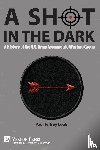
A History of the U.S. Army Asymmetric Warfare Group
Description
This book presents the U.S. Army Asymmetric Warfare Group (AWG) as an example of successful change by the Army in wartime. It argues that creating the AWG required senior leaders to create a vision differing from the Army's self-conceptualization, change bureaucratic processes to turn the vision into an actual unit, and then place the new unit in the hands of uniquely qualified leaders to build and sustain it. In doing this, it considers the forces influencing change within the Army and argues the two most significant are its self-conceptualization and institutional bureaucracy.
The work explores three major subject areas that provide historical context. The first is the Army's institutional history from the early 1950s through 2001. This period begins with the Army seeking to validate its place in America's national security strategy and ends with the Army trying to chart a path into the post-Cold War future. The Army's history is largely one of asymmetric warfare. The work thus examines several campaigns that offered lessons for subsequent wars. Some lessons the Army took to heart, others it ignored. As the AWG was a direct outgrowth of the failures and frustrations the Army experienced in Afghanistan and Iraq, the book examines these campaigns and identifies the specific problems that led senior Army leaders to create the AWG.
Finally, the work chronicles the AWG's creation in 2006, growth, and re-assignment from the Army staff to a fully-fledged organization subordinate to the U.S. Army Training and Doctrine Command in 2011 to its deactivation. This action resulted not from the unit's failure to adapt to a post-insurgency Army focusing on modernization. Rather, it resulted from the Army failing to realize that while the AWG was a product of counterinsurgency, it provided the capability to support the Army during a period of great strategic and institutional uncertainty.
I have a question about the book:
'A Shot in the Dark - Cook, Paul Jeffrey'.
Fill in the form below.
We will respond as fast as possible.
We value your privacy
We use cookies to measure traffic, improve Boekstra and let Google tailor ads to your interests. You can keep using the site either way — even if you decline. More info