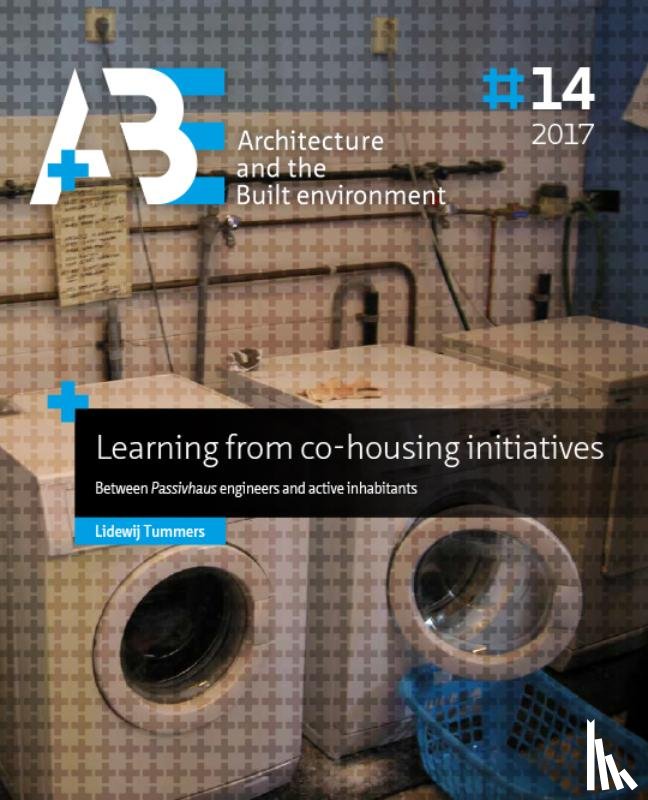
Between Passivhaus engineers and active inhabitants
Description
The aim of this issue of A+BE is to create a deeper understanding of the current rise of co-housing in Europe, and what it could mean in urban policies addressing energy transition and climate change. Studying co-housing is timely because the residents' associations become 'prosumers'; uniting the supply (production) and demand (consumption) of energy, housing and services in their projects. As such, they are increasingly seen as partners in the co-creation and maintenance of urban space.
The study contributes to the emerging body of knowledge with a new understanding of co-housing, analysing its 'key-features' with an interdisciplinary framework, in a European context. It adds a new perspective to existing co-housing research, which is dominated by social sciences, by drawing attention to the physical characteristics of co-housing, produced in architectural, planning and engineering processes (the technosphere).
I have a question about the book:
'Learning from co-housing initiatives - Tummers, Lidewij'.
Fill in the form below.
We will respond as fast as possible.
We value your privacy
We use cookies to measure traffic, improve Boekstra and let Google tailor ads to your interests. You can keep using the site either way — even if you decline. More info