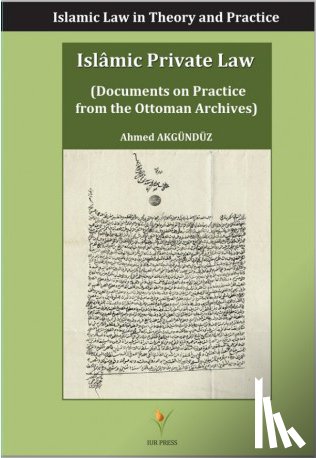
There is no explicit separation in Islâmic law between public and private law, but a special system has been used throughout history. Some scholars use the term Muslim personal law, which derived from the term al-aḥwâl al-shaḫṣiyyah in Fiqh books. But we prefer Islâmic private law; because Muslim personal law indicates different legal meaning - rules governing natural and legal persons. In this book, we will elaborate on Islâmic rules relating to seven branches of private law: personal law, family law, inheritance law, obligations and contracts' law, property law, commercial law, and international private law.
We will explain or summarize Islâmic rules in this book, rather than my (the author's) personal views. Unfortunately, there is a misunderstanding in Western countries: if any Muslim scholar writes an article or book or grants an interview to a journalist to explain Islâmic rules on any issue, most Westerners, and especially people ignorant of Islâmic Law attribute these views to this scholar and holds him or her accountable. For example, a Dutch journalist came to see me and asked about the issue of beating women in the Qur'an, I explained the verse in the Qur'an and some interpretions by the Prophet Muhammed and Muslim jurists. The journalist did not understand what I explained, and many people have accused me of advising Muslims to beat their women. This is absolutely false.
I have a question about the book:
‘Islamic Private Law - Akgunduz, Ahmed’.
Fill in the form below.
We will respond as fast as possible.
We value your privacy
We use cookies to measure traffic, improve Boekstra and let Google tailor ads to your interests. You can keep using the site either way — even if you decline. More info