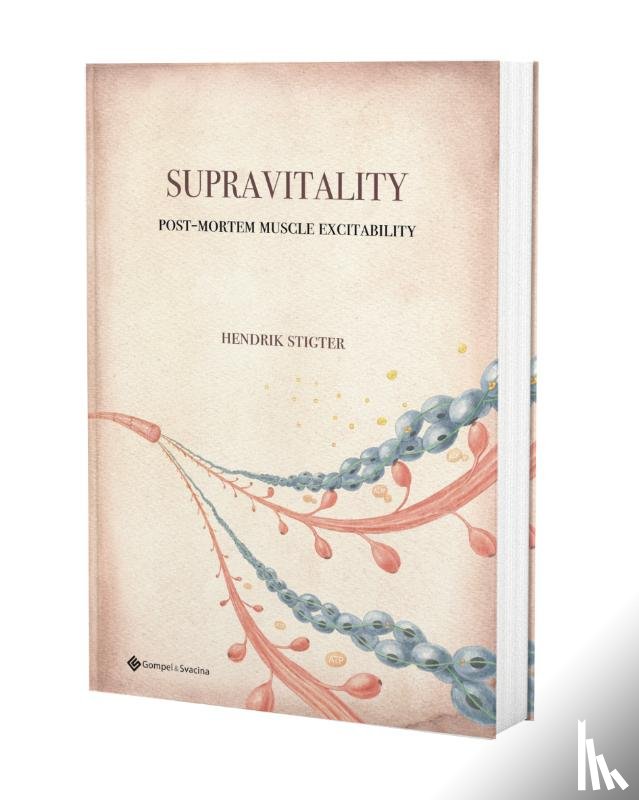
When somebody dies, various post-mortem changes take place in the body such as body cooling, post-mortem lividity, and post-mortem rigidity. Methods based on these phenomena are used to estimate the post-mortem interval of a deceased human being but are inaccurate when used on their own for this purpose.
Therefore, a so-called compound method is recommended in which the outcome of each method is combined for a more reliable estimation of the post-mortem interval. An additional method to estimate the post-mortem interval is based on a temporary post-mortem excitability of skeletal muscle in the early hours after death. Although known for more than a century from studies abroad, in the Netherlands this method is hardly known and applied in daily practice, nor studied on a large scale. Therefore, a field study was conducted to investigate the applicability of this additional method for PMI estimation.
In this dissertation, Stigter shows that there are no cogent arguments restraining this fast, low-cost, non-invasive, and easy-to-learn method, to be structurally included as an additional tool to estimate the post-mortem interval as part of the compound method. Using this method for estimating the post-mortem interval is beneficial to post-mortem investigations in individual cases, further scientific research on a Dutch national level and above all, serves fairer justice.
I have a question about the book:
'Supravitality - Stigter, Hendrik'.
Fill in the form below.
We will respond as fast as possible.
We value your privacy
We use cookies to measure traffic, improve Boekstra and let Google tailor ads to your interests. You can keep using the site either way — even if you decline. More info