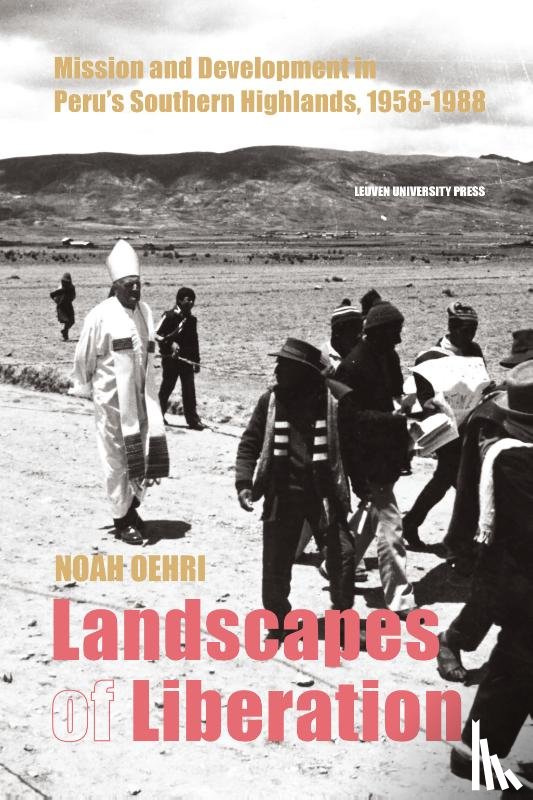
Mission and Development in Peru’s Southern Highlands, 1958 – 1988
Description
The reception of liberation theology in Andean America Catholic mission from the mid-20th century onwards was complicated by geopolitical upheaval, church reform, and the emergent critique of the colonial power matrix to which the Church belonged. Missionary movements to Latin America coincided with visions for a progressive, radically transformative church.
Landscapes of Liberation expands scholarship into liberation theology’s reception in Andean America and critically examines the interplay of the Catholic Church as a global institution with parishes as local actors. Through source material from both sides of the Atlantic, this book charts how a transnational network of pastoral agents and laypeople in Peru’s southern highlands claimed mission and development as intertwined tenets of spiritual and social life throughout three decades of agrarian reform, activism, and social conflict. Ultimately, this book reveals how transformative theories for rural development yield contingent transformations: concrete change, yet contested liberation. Catholic mission from the mid-20th century onwards was complicated by geopolitical upheaval, church reform, and the emergent critique of the colonial power matrix to which the Church belonged. Missionary movements to Latin America coincided with visions for a progressive, radically transformative church.
Landscapes of Liberation expands scholarship into liberation theology’s reception in Andean America and critically examines the interplay of the Catholic Church as a global institution with parishes as local actors. Through source material from both sides of the Atlantic, this book charts how a transnational network of pastoral agents and laypeople in Peru’s southern highlands claimed mission and development as intertwined tenets of spiritual and social life throughout three decades of agrarian reform, activism, and social conflict. Ultimately, this book reveals how transformative theories for rural development yield contingent transformations: concrete change, yet contested liberation. Acknowledgments
Introduction
PART I. MODERNIZING CATHOLICISM (1943-1968)
1. ‘Compulsive Modernization’
2. Mission in Progress
3. Pastors on Pastures
PART II: LIBERATING EVANGELIZATION (1968-1980)
4. Liberation and Revolution
5. Anthropological Concerns
6. Opting for the Peasantry
PART III: MOBILIZING FAITH (1980-1988)
7. A Third Path
8. Land of Communities
Conclusion
Bibliography
I have a question about the book:
‘Landscapes of Liberation - ’.
Fill in the form below.
We will respond as fast as possible.
We value your privacy
We use cookies to measure traffic, improve Boekstra and let Google tailor ads to your interests. You can keep using the site either way — even if you decline. More info