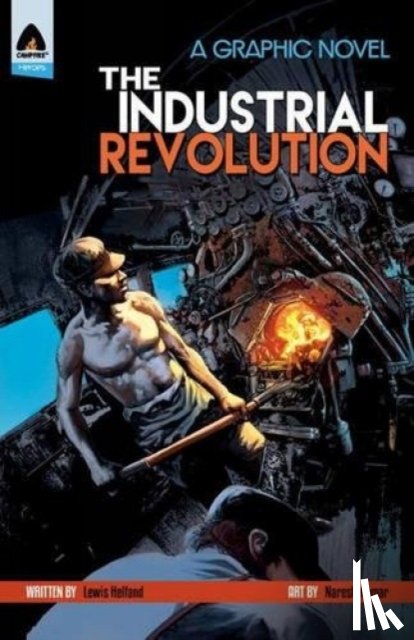
While we all know that large-scale industrialization began in the eighteenth century, the Industrial Revolution truly began in Germany with Johannes Gutenberg and his printing press. His innovation made it possible to mass-produce books, which spread literacy and knowledge all across Europe. It was in the eighteenth century, however, that manual labor started being replaced by what we today know as machines. First in Europe came Thomas Newcomen and James Watt and the steam engine. Then came John Kay and his flying shuttle, which led to the development of the textile industry. Then, in the United States, there was Robert Fulton and his steamboat, and Eli Whitney and his cotton gin. Finally, it was Henry Ford whose mass-produced vehicles made cars affordable to all. The Industrial Revolution continues to this day as formerly less developed countries, especially in Asia, have taken to rapid industrialization to improve their economy. Lexile Reading Level 800L.
I have a question about the book:
'The Industrial Revolution - Helfand, Lewis'.
Fill in the form below.
We will respond as fast as possible.
We value your privacy
We use cookies to measure traffic, improve Boekstra and let Google tailor ads to your interests. You can keep using the site either way — even if you decline. More info