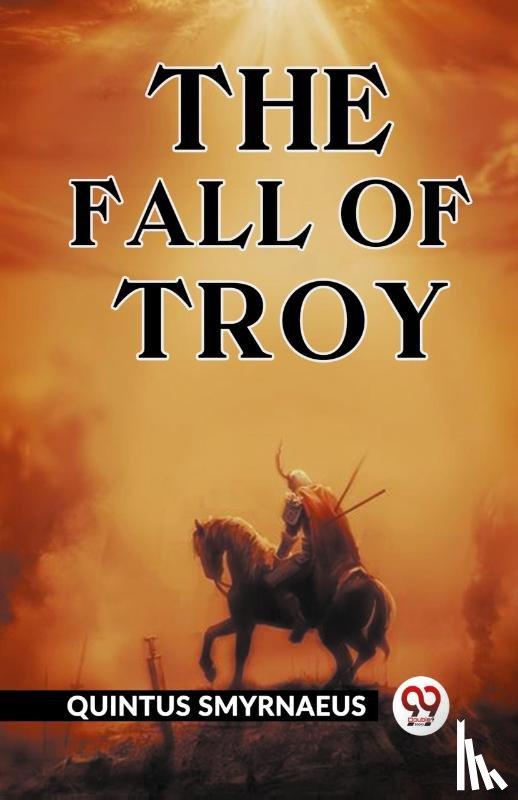
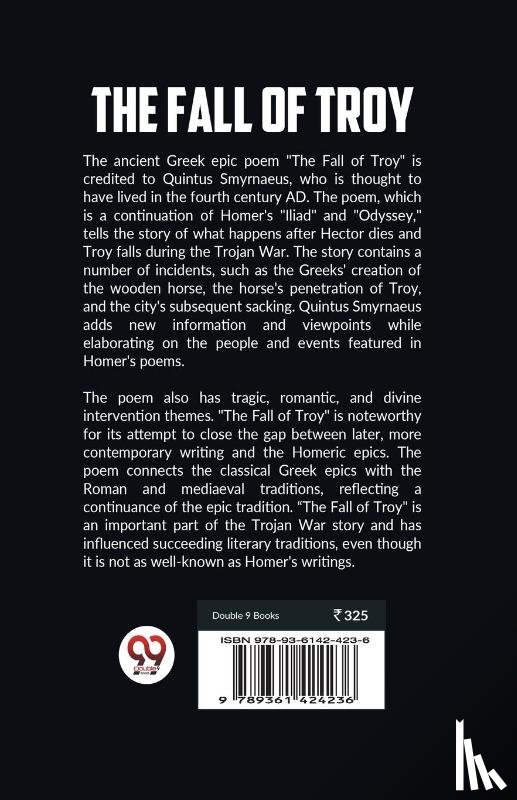
The ancient Greek epic poem The Fall of Troy is credited to Quintus Smyrnaeus, who is thought to have lived in the fourth century AD. The poem, which is a continuation of Homer's Iliad and Odyssey, tells the story of what happens after Hector dies and Troy falls during the Trojan War. The story contains a number of incidents, such as the Greeks' creation of the wooden horse, the horse's penetration of Troy, and the city's subsequent sacking. Quintus Smyrnaeus adds new information and viewpoints while elaborating on the people and events featured in Homer's poems. The poem also has tragic, romantic, and divine intervention themes. The Fall of Troy is noteworthy for its attempt to close the gap between later, more contemporary writing and the Homeric epics. The poem connects the classical Greek epics with the Roman and mediaeval traditions, reflecting a continuance of the epic tradition. ¿The Fall of Troy is an important part of the Trojan War story and has influenced succeeding literary traditions, even though it is not as well-known as Homer's writings.
I have a question about the book:
'The Fall of Troy - Smyrnaeus, Quintus'.
Fill in the form below.
We will respond as fast as possible.
We value your privacy
We use cookies to measure traffic, improve Boekstra and let Google tailor ads to your interests. You can keep using the site either way — even if you decline. More info