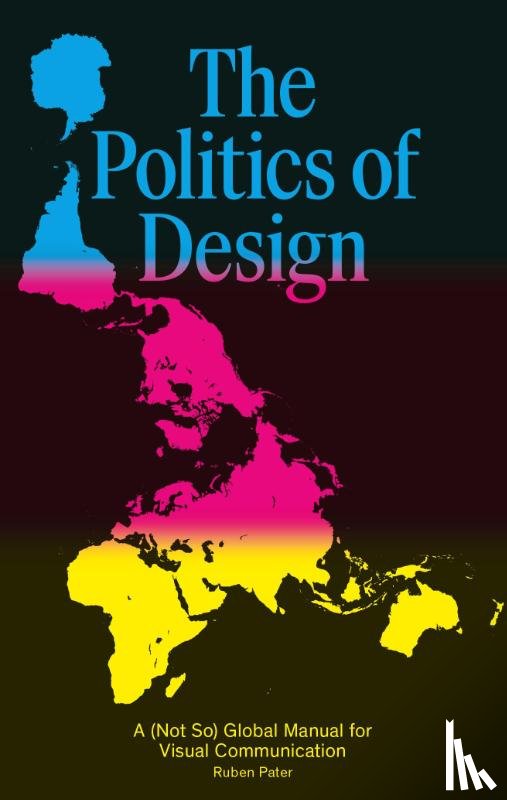
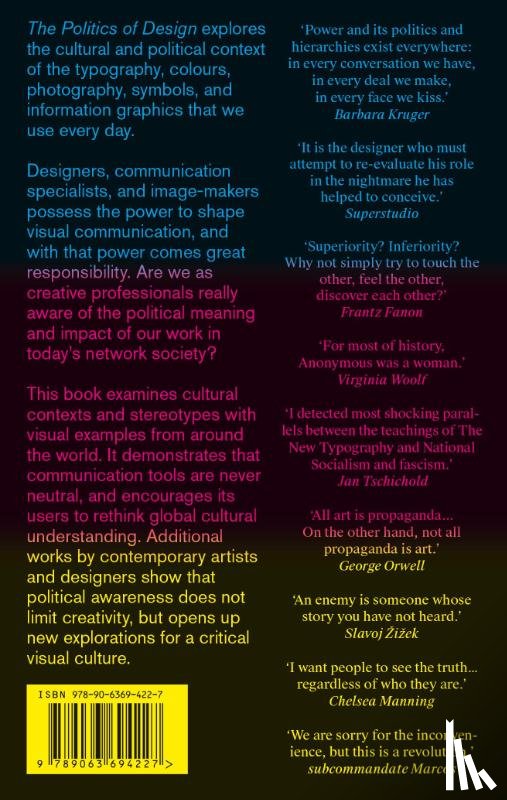
Many designs that appear in today's society will circulate and encounter audiences of many different cultures and languages. With communication comes responsibility; are designers aware of the meaning and impact of their work? An image or symbol that is acceptable in one culture can be offensive or even harmful in the next. A typeface or colour in a design might appear to be neutral, but its meaning is always culturally dependent. If designers learn to be aware of global cultural contexts, we can avoid stereotyping and help improve mutual understanding between people.
Politics of Design is a collection of visual examples from around the world. Using ideas from anthropology and sociology, it creates surprising and educational insight in contemporary visual communication.
The examples relate to the daily practice of both online and offline visual communication: typography, images, colour, symbols, and information.
Politics of Design shows the importance of visual literacy when communicating beyond borders and cultures. It explores the cultural meaning behind the symbols, maps, photography, typography, and colours that are used every day. It is a practical guide for design and communication professionals and students to create more effective and responsible visual communication.
Enhances your visual literacy for communication beyond borders and cultures. It is full of examples of political meaning in graphic design. And it is great for students to create more effective and responsible visual communication.
I have a question about the book:
'Politics of design - Pater, Ruben'.
Fill in the form below.
We will respond as fast as possible.
We value your privacy
We use cookies to measure traffic, improve Boekstra and let Google tailor ads to your interests. You can keep using the site either way — even if you decline. More info