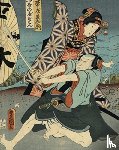
The Edo period (1603-1868) was an exceptionally productive era in Japan from a historical and artistic standpoint; later its influence would extend beyond the archipelago, as far as the West, where it gave rise to a passion for Japanese aesthetics and culture. The term ukiyo-e, which translates as pictures of a floating world, refers to the woodblock color prints that were first created in the Edo period, by combining the talents of painters like Utamaro, Hokusai and Hiroshige with the absolute mastery of block carvers and printers. Utamaro, Hokusai, Hiroshige: Geisha, Samurai and the Culture of Pleasure offers a chance to discover the world of Japanese ukiyo-e prints through over 300 works by some of the most important artists, and the themes that characterize them: from elegant and beautiful women to delicate flowers and birds, famous kabuki actors, valiant samurai and even erotic subjects with their insouciant celebration of love--
I have a question about the book:
'Utamaro, Hokusai Hiroshige - '.
Fill in the form below.
We will respond as fast as possible.
We value your privacy
We use cookies to measure traffic, improve Boekstra and let Google tailor ads to your interests. You can keep using the site either way — even if you decline. More info