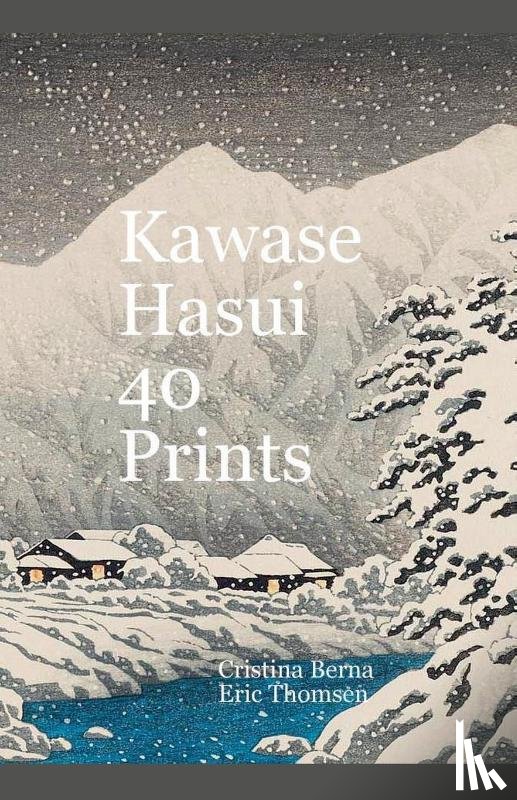
Hasui Kawase (¿¿ ¿¿, May 18, 1883 - November 7, 1957) was a Japanese artist that took up ukiyo-e printing as it disappeared as a commercial printing form and instead became an art for its own sake, so to say.
In Hokusai and Hiroshige¿s time, first half of the 1800s, ukiyo-e prints were cheap - around the price of a bowl of soup -and filled the market which would later develop in postcards and magazines.
Hasui designed traditional prints in a western style, mostly landscapes, often with special lighting effects like evening og night and special weather conditions- he was fond of showing temples and shrines in snow.
He worked closely with a single publisher - Sh¿zabur¿ Watanabe - throughout his life. The Great Kant¿ earthquake in 1923 destroyed Watanabe's workshop, including the finished woodblocks for the yet-undistributed prints and Hasui's sketchbooks. He lost 188 sketchbooks in which he had drawn landscapes and other subjects.
In 1956, he was named a Japanese Living National Treasure. The government Committee for the Preservation of Intangible Cultural Treasures had intended to honor traditional printmaking via awards to Hasui and Ito Shinsui in 1953.
I have a question about the book:
'Kawase Hasui 40 Prints - Berna, Cristina, Thomsen, Eric'.
Fill in the form below.
We will respond as fast as possible.
We value your privacy
We use cookies to measure traffic, improve Boekstra and let Google tailor ads to your interests. You can keep using the site either way — even if you decline. More info