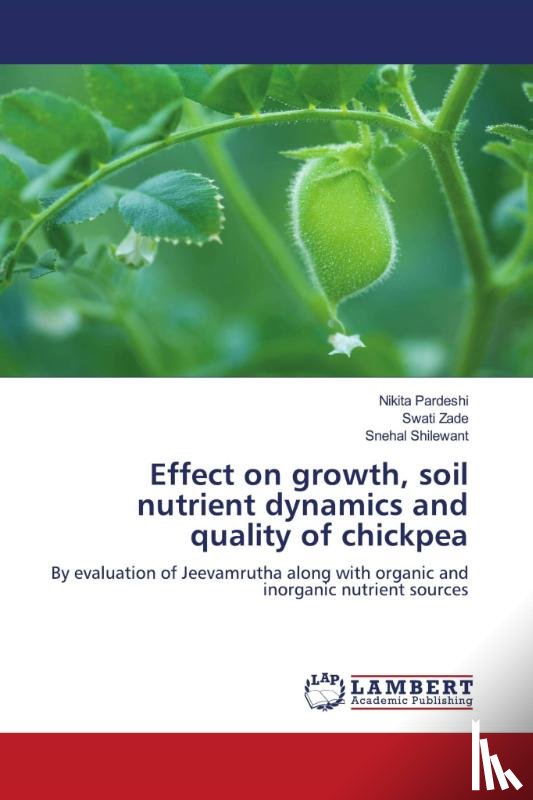
Effect on growth, soil nutrient dynamics and quality of chickpea
By evaluation of Jeevamrutha along with organic and inorganic nutrient sources
Description
Chickpea (Cicer arietinum L.), commonly known as gram, channa, Bengal gram, or garbanzo bean, is a self-pollinated, diploid, annual legume (pulse) with short, hairy pods containing usually two seeds and come under the family of Fabaceae and subfamily of Faboideae. Chickpea is the most important food grain legume of South Asia and the world¿s third most important pulse crop. Chickpea is a highly nutritious grain legume crop and is one of the affordable protein sources and also produces high- quality crop residues for animal feed. It is an important source of energy, protein and both soluble and insoluble fiber. Further, the seed protein contains essential amino acids such as lysine, methionine, threonine, valine, isoleucine and leucine. On an average, chickpea grains contain 60-65% carbohydrates, 6% fat, and between 12% and 31% protein greater than any other pulse crop. it¿s also high in vitamins (especially in B vitamins) and minerals like potassium and phosphorus. Chickpea like other legume crops also replenishes soil fertility through biological nitrogen fixation and contributes to the long term sustainability of cropping systems in cereal legume rotations.
I have a question about the book:
'Effect on growth, soil nutrient dynamics and quality of chickpea - Pardeshi, Nikita, Zade, Swati, Shilewant, Snehal'.
Fill in the form below.
We will respond as fast as possible.
We value your privacy
We use cookies to measure traffic, improve Boekstra and let Google tailor ads to your interests. You can keep using the site either way — even if you decline. More info