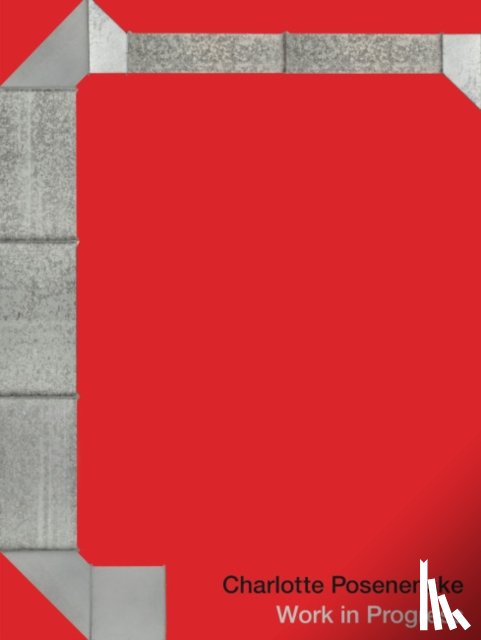
The catalogue traces the evolution of Posenenske's practice from early experiments with mark making to transitional aluminum wall reliefs to industrially fabricated modular sculptures, which are produced in unlimited series and assembled or arranged by consumers at will.
Posenenske exhibited widely during the brief period [1956-68] that she was active as an artist, alongside peers such as Hanne Darboven, Donald Judd, and Sol LeWitt. Her work is distinguished by its radically open-ended nature: she used permutation and contingency as playful conceptual devices to oppose compositional hierarchy and invite the public to collaborate by reconfiguring her variable sculptures. Embracing reductive geometry, repetition, and industrial fabrication, she developed a form of mass-produced Minimalism that addressed the pressing socioeconomic concerns of the 1960s by circumventing the art market and rejecting established formal and cultural hierarchies.
Text: Alexis Lowry, Isabelle Malz, Rita McBride, Jessica Morgan, Charlotte Posenenske, Daniel Spaulding, Catherine Wood
I have a question about the book:
‘Charlotte Posenenske - ’.
Fill in the form below.
We will respond as fast as possible.
We value your privacy
We use cookies to measure traffic, improve Boekstra and let Google tailor ads to your interests. You can keep using the site either way — even if you decline. More info