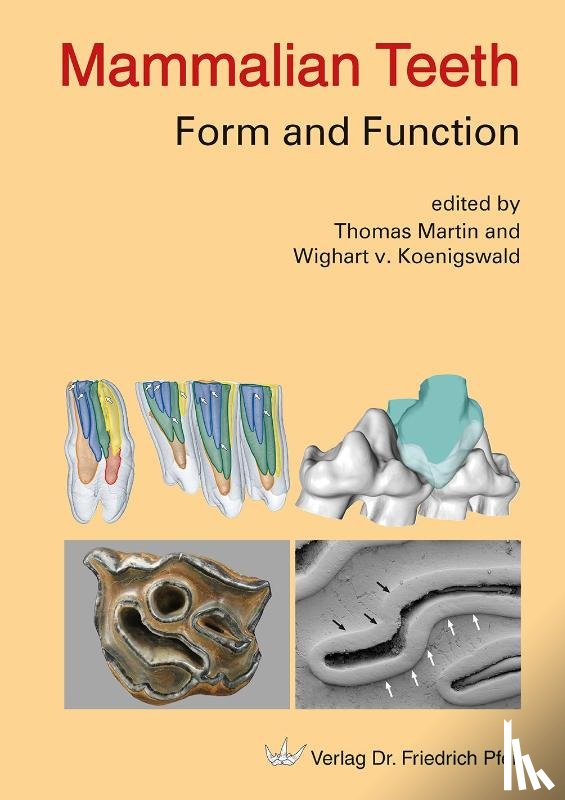
Teeth are the hardest and most durable parts of the mammalian body. Even after millions of years they provide a wealth of paleobiologic information. Teeth reflect the interaction of mammals with the environment, as evident from their shape and traces of mastication on their surface. Teeth of fossil and extant mammals provide information on the diet, mode of food processing, biomechanics of mastication, and energy gain. Modern analytical and visualization techniques such as micro-computed tomography, high-resolution surface analysis, and 3D imaging have greatly boosted the research on dental function in recent years. The book "Mammalian Teeth - Form and Function" offers a comprehensive synopsis of the latest advances in the field of dental function research. It will be of interest not only to paleontologists and biologists, but also to students and scholars in archeology, animal nutrition, and dentistry.
I have a question about the book:
'Mammalian Teeth - Form and Function - '.
Fill in the form below.
We will respond as fast as possible.
We value your privacy
We use cookies to measure traffic, improve Boekstra and let Google tailor ads to your interests. You can keep using the site either way — even if you decline. More info