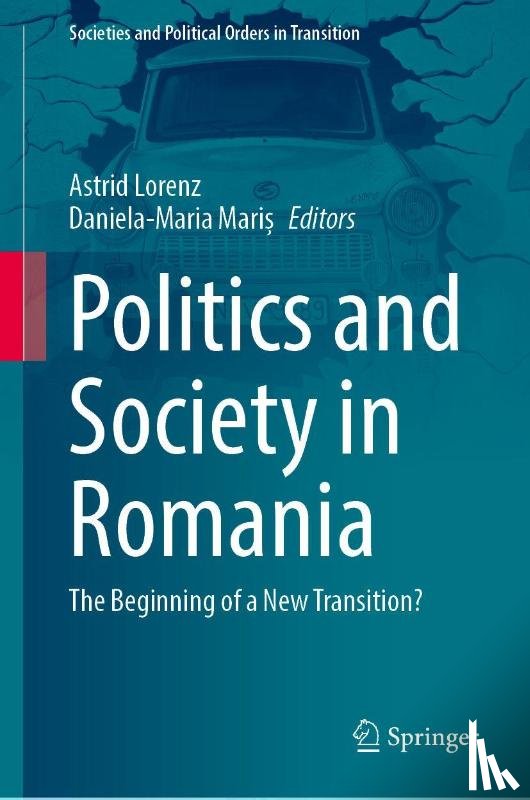
Romania is the sixth-largest country in the European Union by population. However, after decades of democratization and integration into the Euro-Atlantic organizations, many Romanian voters now seem willing to abandon this path of development. Does this change of direction indicate the beginning of a transition to a new era? This book summarizes how politics and society in Romania changed after the 1989 revolution and how these changes were connected to the country’s EU accession. It also examines old and new challenges. In doing so, it provides fresh insights into various research fields and issues. Readers interested in the extent to which politics can be guided by law will find relevant material here. The same applies to scholars who ask if political actors can effectively shape the development of a polity and society. The book is also relevant for those who seek to understand whether the EU has an impact on domestic politics and society in its member states, as suggested by debates about its “transforming power.”
The editors
Prof. Dr. Astrid Lorenz is a Professor of German and European Politics at Leipzig University, Germany. She leads an international project team that is researching the rule of law, including the case of Romania.
Daniela-Maria Mari¿ is a PhD student of Political Science at Leipzig University, Germany, researching Romanian politics. Additionally, she is a program officer at the Konrad Adenauer Foundation, Germany.
I have a question about the book:
'Politics and Society in Romania - '.
Fill in the form below.
We will respond as fast as possible.
We value your privacy
We use cookies to measure traffic, improve Boekstra and let Google tailor ads to your interests. You can keep using the site either way — even if you decline. More info