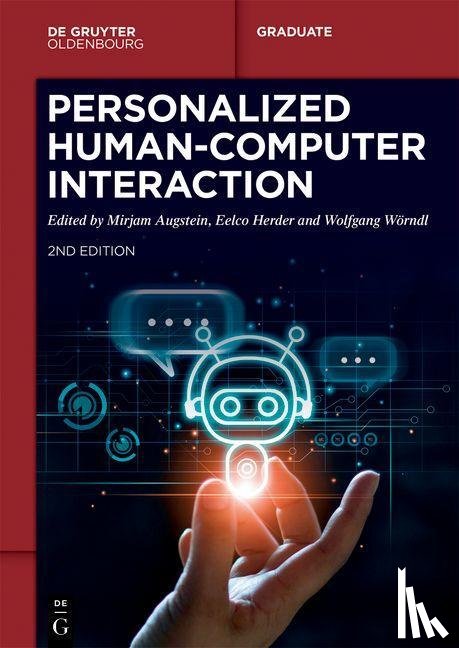
Personalized and adaptive systems employ user models to adapt content, services, interaction or navigation to individual users' needs. User models can be inferred from implicitly observed information, such as the user's interaction history or current location, or from explicitly entered information, such as user profile data or ratings. Applications of personalization include item recommendation, location-based services, learning assistance and the tailored selection of interaction modalities. With the transition from desktop computers to mobile devices and ubiquitous environments, the need for adapting to changing contexts is even more important. However, this also poses new challenges concerning privacy issues, user control, transparency, and explainability. In addition, user experience and other human factors are becoming increasingly important. This book describes foundations of user modeling, discusses user interaction as a basis for adaptivity, and showcases several personalization approaches in a variety of domains, including music recommendation, tourism, and accessible user interfaces.
I have a question about the book:
'Personalized Human-Computer Interaction - '.
Fill in the form below.
We will respond as fast as possible.
We value your privacy
We use cookies to measure traffic, improve Boekstra and let Google tailor ads to your interests. You can keep using the site either way — even if you decline. More info