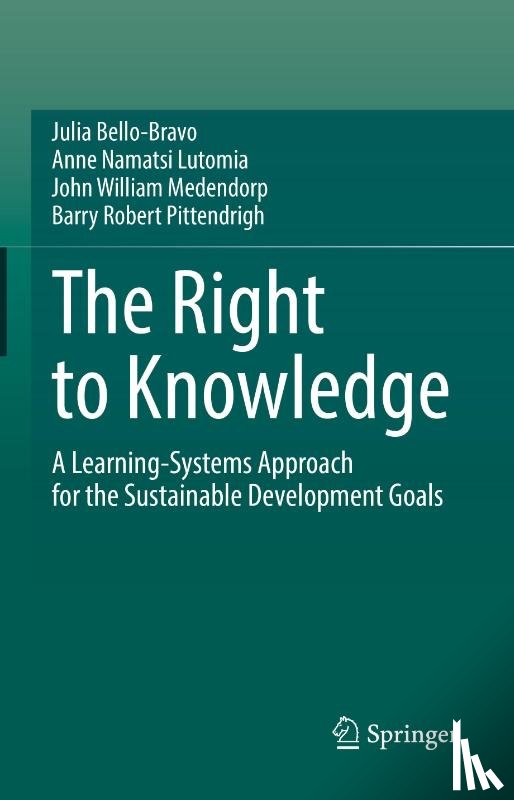
A Learning-Systems Approach for the Sustainable Development Goals
Description
At a time when the future shape of international development and the meeting of the Sustainable Development Goals (SDGs) are highly uncertain, this book outlines a years-tested, learning-systems approach for cost-effectively scaling the reach, engagement, and adoption of gold-standard research-for-development (R4D) innovations to support the SDGs to the widest possible demographics. If you are researching, producing, or disseminating public-good e-extension solutions for problems at any scale, this book’s interventions at all points along the value chain—from basic research to solution development, distribution, uptake, and end-user feedback—enable reaching even the most difficult-to-reach groups, especially those in the global South, those who speak local rather than majority languages, may have low or no print literacy, are geographically isolated, or face barriers to inclusion and participation (particularly women, minorities, and marginalized groups).
Describing or offering “menus” or “encyclopedias” of accessible educational content on R4D innovations placed in diverse local languages to help reach the SDGs requires coordinated global partnerships among content creators (SDG 17), delivery systems using formal and informal pathways to provide life-sustaining knowledge (SDG 4), and diverse digital communities of practice with the access necessary to locally exercise their right to that knowledge (SDG 16). Implementing this book’s learning-systems approach opens channels for advancing all the SDGs, especially prioritizing the eradication of poverty and hunger, improving health and well-being, providing safe shelter, and ensuring gender security. 1 Digital Communities of Practice and the Right to Knowledge.- 2 Learning-Systems Approaches for the Right to Knowledge: Highly-Accessible Materials for Achieving the SDGs.- 3 Empowering the Right to Knowledge: Lowering Transaction Costs for Educational Interventions and Communication Through Loosely Coupled Systems.- 4 Knowledge Engagement and ICT-Scaling: Gold-Standard Knowledge for Global, National, and Community Change.- 5 How ICT-Based Big Data, Machine Learning, and AI Support the Achievement of the Sustainable Development Goals: The Case of SAWBO.- 6 The Right to Traditional Knowledge and Language.- 7 Sustainability, the Right to Knowledge, and the SDGS (Conclusion).
I have a question about the book:
'The Right to Knowledge - Lutomia, Anne Namatsi, Medendorp, John William, Bello-Bravo, Julia, Pittendrigh, Barry Robert'.
Fill in the form below.
We will respond as fast as possible.
We value your privacy
We use cookies to measure traffic, improve Boekstra and let Google tailor ads to your interests. You can keep using the site either way — even if you decline. More info