Excerpt from the editorial in¿The Journal of New Historical Perspectives, Vol. 3, #4, 2011:
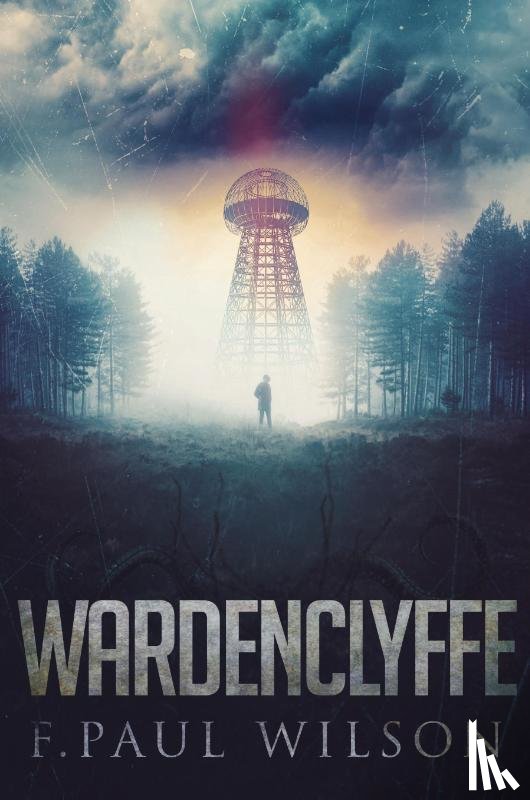
On the night of July 15, 1903, Nikola Tesla powered up his 190-foot tower in Wardenclyffe on Long Island's north shore.¿The bolts of energy radiating from the apical dome were visible as far away as New Haven, Connecticut.¿This was the first and last time anyone would witness such a display.¿Three years later, broke and unable to secure further funding, Tesla abandoned the Wardenclyffe tower and his dream of worldwide wireless power.¿He returned to Manhattan where he promptly suffered a nervous breakdown.¿
So say the history books.¿ ¿
But new evidence has surfaced that a shadowy fraternal order stepped in and provided generous funding after J. P. Morgan reneged.¿Witnesses state that testing of the tower continued but only on foggy days when the discharges would not be noticed.¿The final test took place on April 18, 1906.¿Around dawn, in heavy fog, the tower was charged to maximum capacity; across the Atlantic, in¿Abereiddy,¿Wales, two copper prongs attached to a 50-watt lightbulb were thrust into the ground.¿The bulb lit.¿ Tesla had proved that worldwide wireless power was possible.
Why then, at the moment of his greatest vindication, did Nikola Tesla abandon his project?¿What could possibly have transpired at Wardenclyffe that day to so rattle him that he would deny the world his transformative technology? We may never know.
I have a question about the book:
'Wardenclyffe - Wilson, F Paul'.
Fill in the form below.
We will respond as fast as possible.
We value your privacy
We use cookies to measure traffic, improve Boekstra and let Google tailor ads to your interests. You can keep using the site either way — even if you decline. More info