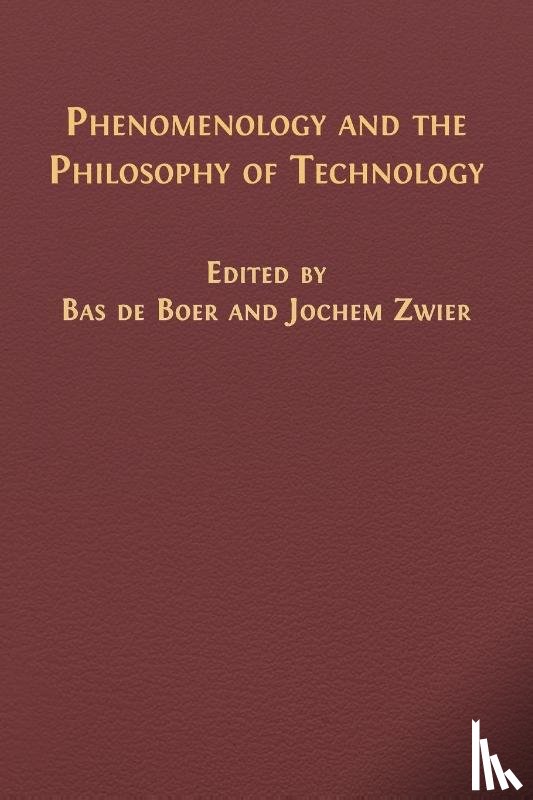
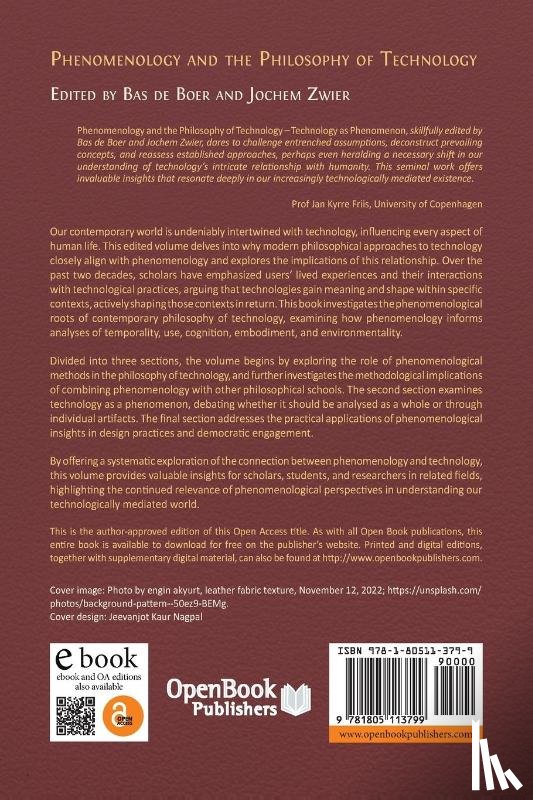
Our contemporary world is undeniably intertwined with technology, influencing every aspect of human life. This edited volume delves into why modern philosophical approaches to technology closely align with phenomenology and explores the implications of this relationship. Over the past two decades, scholars have emphasized users' lived experiences and their interactions with technological practices, arguing that technologies gain meaning and shape within specific contexts, actively shaping those contexts in return. This book investigates the phenomenological roots of contemporary philosophy of technology, examining how phenomenology informs analyses of temporality, use, cognition, embodiment, and environmentality.
Divided into three sections, the volume begins by exploring the role of phenomenological methods in the philosophy of technology, and further investigates the methodological implications of combining phenomenology with other philosophical schools. The second section examines technology as a phenomenon, debating whether it should be analysed as a whole or through individual artifacts. The final section addresses the practical applications of phenomenological insights in design practices and democratic engagement.
By offering a systematic exploration of the connection between phenomenology and technology, this volume provides valuable insights for scholars, students, and researchers in related fields, highlighting the continued relevance of phenomenological perspectives in understanding our technologically mediated world.
I have a question about the book:
'Phenomenology and the Philosophy of Technology - '.
Fill in the form below.
We will respond as fast as possible.
We value your privacy
We use cookies to measure traffic, improve Boekstra and let Google tailor ads to your interests. You can keep using the site either way — even if you decline. More info