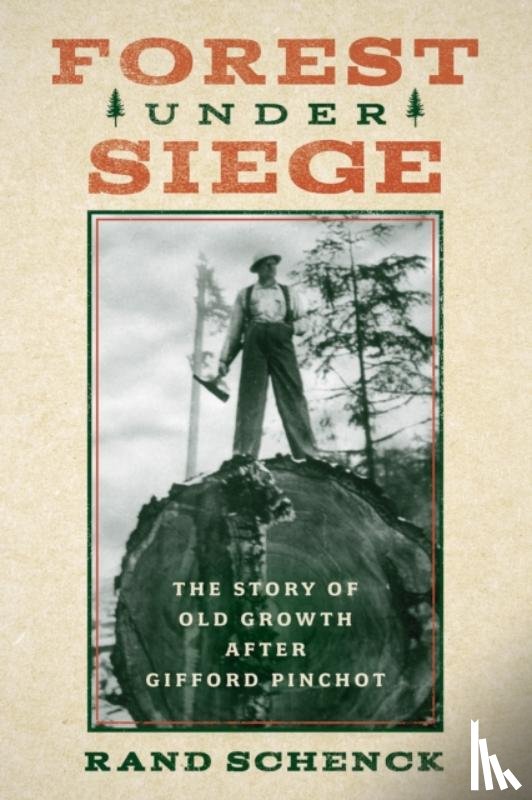
Gifford Pinchot, Chief of the United States Forest Service (USFS) from 1905 to 1910, marveled at the Cascades' old growth trees. Yet sadly, despite what its namesake championed, no current visitor to the Gifford Pinchot National Forest can see the forest he revered. Instead, by mid-century the USFS dramatically increased allowable timber industry logging for all national forests and began replacing ancient forests with younger, faster-growing trees--alarming changes that threatened the loss of these amazing northwest woodlands as well as some of the distinctive creatures that inhabit them. By 1990 less than thirteen percent of the Pacific Northwest's original old growth remained, and projected USFS plans were to log most of the unprotected remnant by 2023.Focusing primarily on the Gifford Pinchot National Forest, environmental activist Rand Schenk reviewed numerous USFS reports and interviewed its leaders, timber war stakeholders, and prominent environmentalists to examine 100 years of Pacific Northwest forestry. He reveals just how close regional forests came to extinction--discussing why the USFS moved away from decades of stewardship to relentless and unsustainable harvest, consequences of intensive management, and why attempts to replant trees failed. He explores how new laws like the Multiple Use-Sustained Yield Act and surprise discoveries following the Mount St. Helens volcanic eruption slowly initiated change. Finally, he reviews efforts to restore the damage and offers hope for old growth rebirth. Focusing primarily on the Gifford Pinchot National Forest, environmental activist Rand Schenk reviewed numerous United States Forest Service reports and interviewed its leaders, timber war stakeholders, and prominent environmentalists to examine 100 years of Pacific Northwest forestry.
I have a question about the book:
'Forest Under Siege - Schenck, Rand'.
Fill in the form below.
We will respond as fast as possible.
We value your privacy
We use cookies to measure traffic, improve Boekstra and let Google tailor ads to your interests. You can keep using the site either way — even if you decline. More info