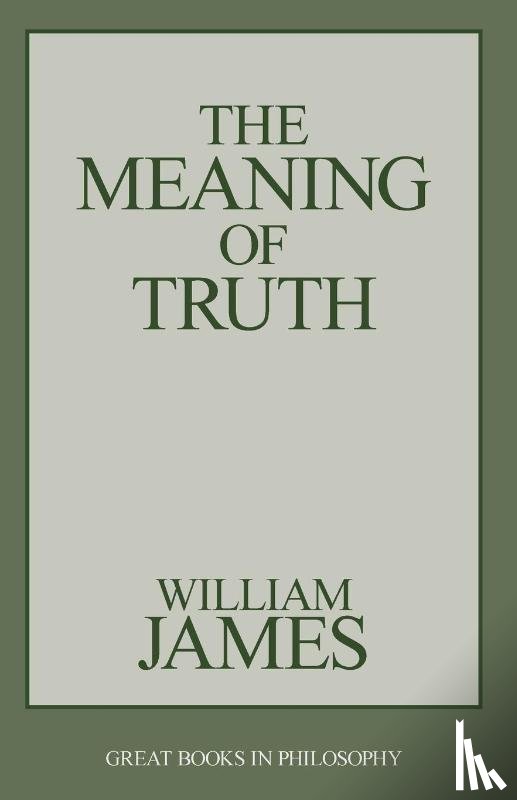
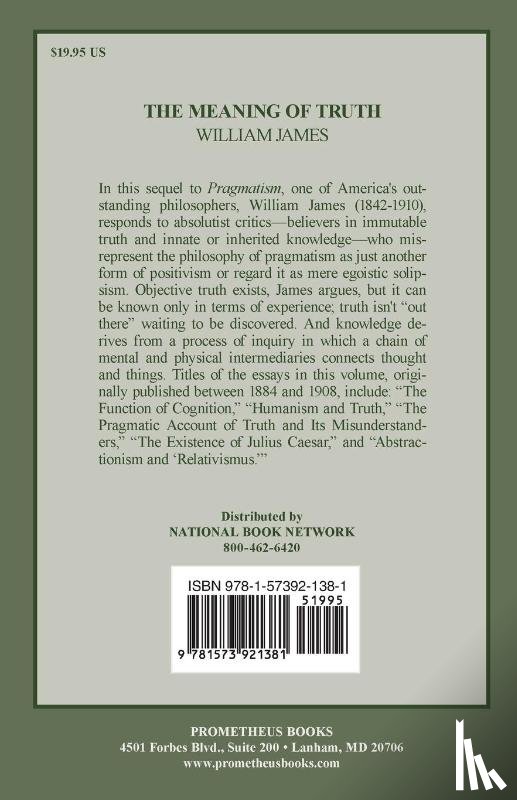
Preeminent American philosopher and educator John Dewey (1859-1952) rejected Hegelian idealism for the pragmatism of William James.In this collection of informal, highly readable essays, originally published between 1897 and 1909, Dewey articulates his now classic philosophical concepts of knowledge and truth and the nature of reality. Here Dewey introduces his scientific method and uses critical intelligence to reject the traditional ways of viewing philosophical discourse. Knowledge cannot be divorced from experience; it is gradually acquired through interaction with nature. Philosophy, therefore, has to be regarded as itself a method of knowledge and not as a repository of disembodied, pre-existing absolute truths.
I have a question about the book:
'Meaning of Truth - James, William'.
Fill in the form below.
We will respond as fast as possible.
We value your privacy
We use cookies to measure traffic, improve Boekstra and let Google tailor ads to your interests. You can keep using the site either way — even if you decline. More info