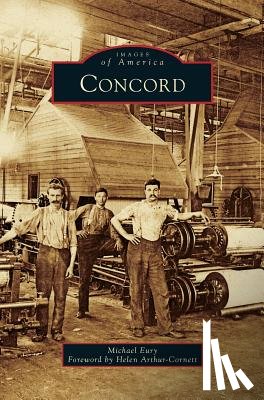
When state legislator Stephen Cabarrus sought a compromise between quarreling Scotch-Irish and German settlers over the location of Cabarrus County's seat, his appeal led to a "concord" that gave birth to one of North Carolina's most charming cities. Not long after its 1796 founding, Concord began a transformation from an agricultural community into a textile-manufacturing mecca as captains of industry built empires exploiting the cotton that so abundantly sprouted from the region's fruitful soil. By the advent of the 1900s, textiles' prosperity encouraged an architectural renaissance within Concord's downtown, where the stately buildings, churches, and residences still stand today. While the cotton mills that made Concord famous are no more, the city has transitioned into a fast-paced motorsports center and the home of North Carolina's most popular tourist destination, Concord Mills shopping mall.
I have a question about the book:
'Concord - Eury, Michael'.
Fill in the form below.
We will respond as fast as possible.
We value your privacy
We use cookies to measure traffic, improve Boekstra and let Google tailor ads to your interests. You can keep using the site either way — even if you decline. More info