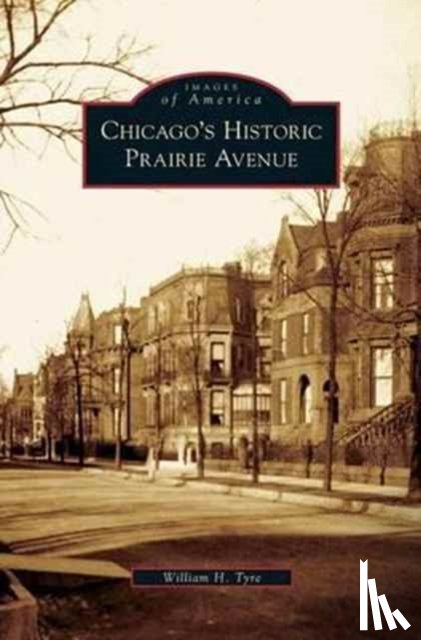
Prairie Avenue evolved into Chicago's most exclusive residential street during the last three decades of the 19th century. The city's wealthiest citizens--Marshall Field, Philip Armour, and George Pullman--were soon joined by dozens of Chicago's business, social, and civic leaders, establishing a neighborhood that the Chicago Herald proclaimed "a cluster of millionaires not to be matched for numbers anywhere else in the country." Substantial homes were designed by the leading architects of the day, including William Le Baron Jenney, Burnham and Root, Solon S. Beman, and Richard Morris Hunt. By the early 1900s, however, the neighborhood began a noticeable transformation as many homes were converted to rooming houses and offices, while others were razed for construction of large plants for the printing and publishing industry. The rescue of the landmark Glessner house in 1966 brought renewed attention to the area, and in 1979, the Prairie Avenue Historic District was designated. The late 1990s saw the rebirth of the area as a highly desirable residential neighborhood known as the South Loop.
I have a question about the book:
'Chicago's Historic Prairie Avenue - Tyre, William H'.
Fill in the form below.
We will respond as fast as possible.
We value your privacy
We use cookies to measure traffic, improve Boekstra and let Google tailor ads to your interests. You can keep using the site either way — even if you decline. More info