Acoustic Resonance, Neoliberalism, and Biopolitics
Description
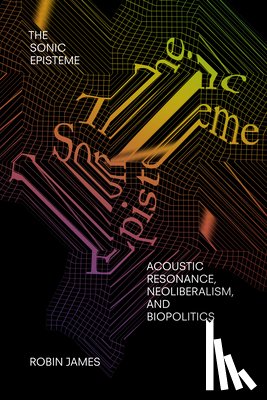
In The Sonic Episteme Robin James examines how twenty-first-century conceptions of sound as acoustic resonance shape notions of the social world, personhood, and materiality in ways that support white supremacist capitalist patriarchy. Drawing on fields ranging from philosophy and sound studies to black feminist studies and musicology, James shows how what she calls the sonic episteme-a set of sound-based rules that qualitatively structure social practices in much the same way that neoliberalism uses statistics-employs a politics of exception to maintain hegemonic neoliberal and biopolitical projects. Where James sees the normcore averageness of Taylor Swift and Spandau Ballet as contributing to the sonic episteme's marginalization of nonnormative conceptions of gender, race, and personhood, the black feminist political ontologies she identifies in BeyoncÉ's and Rihanna's music challenge such marginalization. In using sound to theorize political ontology, subjectivity, and power, James argues for the further articulation of sonic practices that avoid contributing to the systemic relations of domination that biopolitical neoliberalism creates and polices. Robin James examines how twenty-first-century conceptions of sound as acoustic resonance shape notions of the social world, personhood, and materiality in ways that support white supremacist capitalist patriarchy.
I have a question about the book:
'The Sonic Episteme - James, Robin'.
Fill in the form below.
We will respond as fast as possible.
We value your privacy
We use cookies to measure traffic, improve Boekstra and let Google tailor ads to your interests. You can keep using the site either way — even if you decline. More info