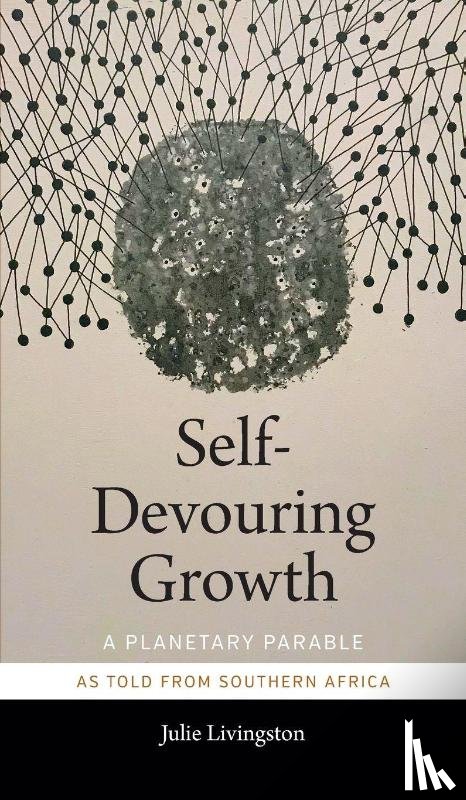
Under capitalism, economic growth is seen as the key to collective well-being. In Self-Devouring Growth Julie Livingston upends this notion, showing that while consumption-driven growth may seem to benefit a particular locale, it produces a number of unacknowledged, negative consequences that ripple throughout the wider world. Structuring the book as a parable in which the example of Botswana has lessons for the rest of the globe, Livingston shows how fundamental needs for water, food, and transportation become harnessed to what she calls self-devouring growth: an unchecked and unsustainable global pursuit of economic growth that threatens catastrophic environmental destruction. As Livingston notes, improved technology alone cannot stave off such destruction; what is required is a greater accounting of the web of relationships between humans, nonhuman beings, plants, and minerals that growth entails. Livingston contends that by failing to understand these relationships and the consequences of self-devouring growth, we may be unknowingly consuming our future. Julie Livingston shows how the global pursuit of economic and resource-driven growth comes at the expense of catastrophic destruction, thereby upending popular notions that economic growth and development is necessary for improving a community?s wellbeing.
I have a question about the book:
'Self-Devouring Growth - Livingston, Julie'.
Fill in the form below.
We will respond as fast as possible.
We value your privacy
We use cookies to measure traffic, improve Boekstra and let Google tailor ads to your interests. You can keep using the site either way — even if you decline. More info