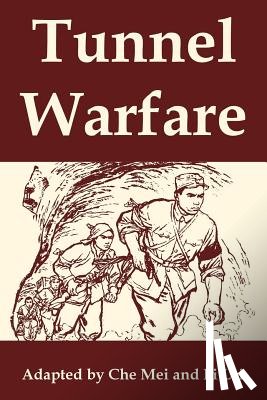
During China's War of Resistance Against Japan (1917-1941), the Japanese invaders in 1942 launched barbarous "mopping-up" campaigns against the Communist-led base areas in central Hopei Province. But the people there, every man, woman and child, inspired by Chairman Mao's thinking on people's war, joined in the war effort, closely co-ordinating with the Eighth Route Army units to develop guerrilla warfare over a large area, and creating the "tunnel warfare" that has become so well known. Making good use of tunnels, the army and people fought the Japanese aggressors and their local puppets, using various stratagems to wipe out the enemy's effectives. From an inferior force they grew into a strong one, going from the defensive over to the offensive at a time when the enemy was strong and we were weak. In the end the enemy "mopping-up" campaigns were smashed and the aggressors suffered decisive defeats.
I have a question about the book:
'Tunnel Warfare - Mei, Che'.
Fill in the form below.
We will respond as fast as possible.
We value your privacy
We use cookies to measure traffic, improve Boekstra and let Google tailor ads to your interests. You can keep using the site either way — even if you decline. More info