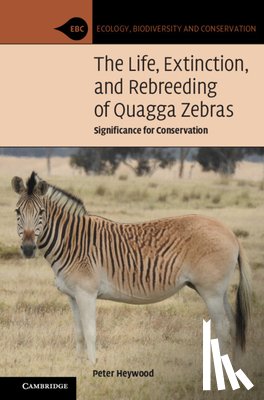
The Life, Extinction, and Rebreeding of Quagga Zebras
Significance for Conservation
Description
Quaggas were beautiful pony-sized zebras in southern Africa that had fewer stripes on their bodies and legs, and a browner body coloration than other zebras. Indigenous people hunted quaggas, portrayed them in rock art, and told stories about them. Settlers used quaggas to pull wagons and to protect livestock against predators. Taken to Europe, they were admired, exhibited, harnessed to carriages, illustrated by famous artists and written about by scientists. Excessive hunting led to quaggas' extinction in the 1880s but DNA from museum specimens showed rebreeding was feasible and now zebras resembling quaggas live in their former habitats. This rebreeding is compared with other de-extinction and rewilding ventures and its appropriateness discussed against the backdrop of conservation challenges—including those facing other zebras. In an Anthropocene of species extinction, climate change and habitat loss which organisms and habitats should be saved, and should attempts be made to restore extinct species? Quagga zebras that pulled carriages and protected livestock against predators, are the focus of this book that combines history, biology, Bushmen stories, art, and literature. Hunted into extinction for their high-quality leather, their DNA showed rebreeding was feasible, and animals resembling quaggas now live in their old habitats.
I have a question about the book:
'The Life, Extinction, and Rebreeding of Quagga Zebras - Heywood, Peter'.
Fill in the form below.
We will respond as fast as possible.
We value your privacy
We use cookies to measure traffic, improve Boekstra and let Google tailor ads to your interests. You can keep using the site either way — even if you decline. More info