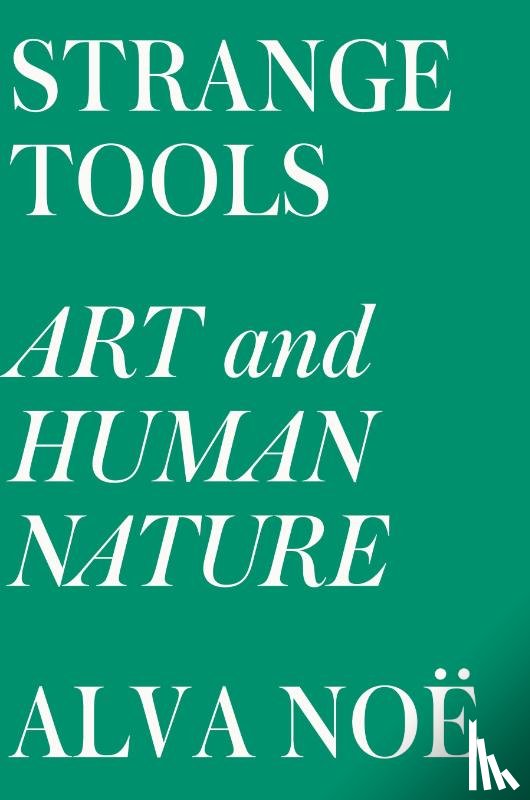
A philosopher makes the case for thinking of works of art as tools for investigating ourselvesIn Strange Tools: Art and Human Nature, the philosopher and cognitive scientist Alva Noë argues that our obsession with works of art has gotten in the way of understanding how art works on us. For Noë, art isn't a phenomenon in need of an explanation but a mode of research, a method of investigating what makes us human--a strange tool. Art isn't just something to look at or listen to--it is a challenge, a dare to try to make sense of what it is all about. Art aims not for satisfaction but for confrontation, intervention, and subversion. Through diverse and provocative examples from the history of art-making, Noë reveals the transformative power of artistic production. By staging a dance, choreographers cast light on the way bodily movement organizes us. Painting goes beyond depiction and representation to call into question the role of pictures in our lives. Accordingly, we cannot reduce art to some natural aesthetic sense or trigger; recent efforts to frame questions of art in terms of neurobiology and evolutionary theory alone are doomed to fail.By engaging with art, we are able to study ourselves in profoundly novel ways. In fact, art and philosophy have much more in common than we might think. Reframing the conversation around artists and their craft, Strange Tools is a daring and stimulating intervention in contemporary thought.
I have a question about the book:
‘Strange Tools - Noë, Alva’.
Fill in the form below.
We will respond as fast as possible.
We value your privacy
We use cookies to measure traffic, improve Boekstra and let Google tailor ads to your interests. You can keep using the site either way — even if you decline. More info