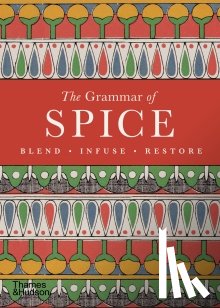
Even the most enthusiastic cooks and food lovers have jars of dusty powders inhabiting kitchen cabinets long past their expiration dates. We often don’t know much about them, where they come from, or how to use them. And yet, spices can elevate the everyday act of making and consuming food to a higher plane of experience.
Spices have played an intrinsic part in the human story, running through history, geography, anthropology, politics, religion, culture, art, and design. From alligator pepper seeds, which in the Yoruba culture are given to newborn babies to taste a few minutes after birth, to charoli seeds, which are used in traditional Indian desserts eaten during the festival of Holi, and caraway seeds, which were added to medieval love potions, each spice has its own significance in the lives of the people who use it.
Now available in paperback, The Grammar of Spice is a practical resource for cooks that also changes the way we understand the role spices play in defining not only our food but also our place in the world. Featuring custom illustrations for each of the more than sixty spices included—inspired by the work of Owen Jones, one of the great designers and travelers of his time—this beautiful, informative book celebrates the world of flavors that spices open us up to. A compact edition of this stylishly illustrated compendium of over sixty spices, brilliantly designed by the bestselling author of Herbarium.
I have a question about the book:
'The Grammar of Spice - Hildebrand, Caz'.
Fill in the form below.
We will respond as fast as possible.
We value your privacy
We use cookies to measure traffic, improve Boekstra and let Google tailor ads to your interests. You can keep using the site either way — even if you decline. More info