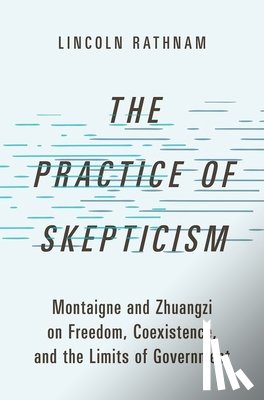
Montaigne and Zhuangzi on Freedom, Coexistence, and the Limits of Government
Description
Although the ideas of freedom, peaceful coexistence, and a modest role for government are central to the liberal political tradition and the political practices of contemporary liberal democracies, their justification is disputed. This book argues that a comparative investigation of the thought of the sixteenth century French philosopher Michel de Montaigne and the ancient Chinese Daoist thinker Zhuangzi can help clarify one class of argument for these concerns, namely those connected to forms of skepticism.
Both early modern France and China during the Warring States period gave rise to great intellectual and political conflicts; these thinkers responded by examining the limits of human knowledge and questioning claims to comprehensive knowledge of the best way of living. They argue that once we understand these limits, we will uphold the freedom to think and act in a variety of ways.
Adopting this skeptical stance also undermines many of the grand pretensions to knowledge that motivate violent political projects. It leads, in this way, to a more modest or constrained view of the proper scope of good government. These claims are not of mere historical significance; the conditions of deep disagreement out of which their works emerged continue to persist today, as do the attempts to violently impose particular ways of living backed by dubious claims to knowledge. For this reason, the work of Montaigne and Zhuangzi helps us to better understand our contemporary political challenges and the ways in which we might move forward. This book argues that a comparative investigation of the thought of the sixteenth century French philosopher Michel de Montaigne and the ancient Chinese Daoist thinker Zhuangzi can help to understand one class of argument for these concerns, namely those connected to forms of skepticism.
I have a question about the book:
'The Practice of Skepticism - Rathnam, Lincoln'.
Fill in the form below.
We will respond as fast as possible.
We value your privacy
We use cookies to measure traffic, improve Boekstra and let Google tailor ads to your interests. You can keep using the site either way — even if you decline. More info