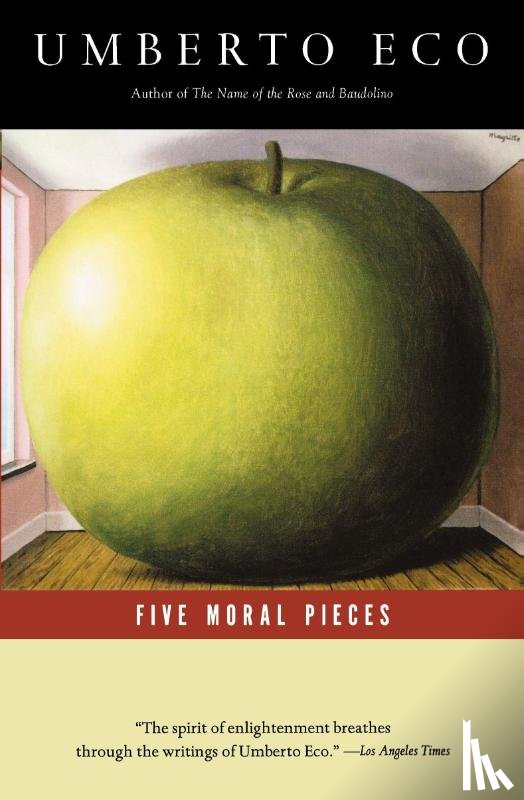
Embracing the web of multiculturalism that has become a fact of contemporary life from New York to New Delhi, Eco argues that we are more connected to people of other traditions and customs than ever before, making tolerance the ultimate value in today's world. What good does war do in a world where the flow of goods, services, and information is unstoppable and the enemy is always behind the lines? In the most personal of the essays, Eco recalls experiencing liberation from fascism in Italy as a boy, and examines the various historical forms of fascism, always with an eye toward such ugly manifestations today. And finally, in an intensely personal open letter to an Italian cardinal, Eco reflects on a question underlying all the reflections in the book--what does it mean to be moral or ethical when one doesn't believe in God?
I have a question about the book:
'Five Moral Pieces - Eco, Umberto'.
Fill in the form below.
We will respond as fast as possible.
We value your privacy
We use cookies to measure traffic, improve Boekstra and let Google tailor ads to your interests. You can keep using the site either way — even if you decline. More info