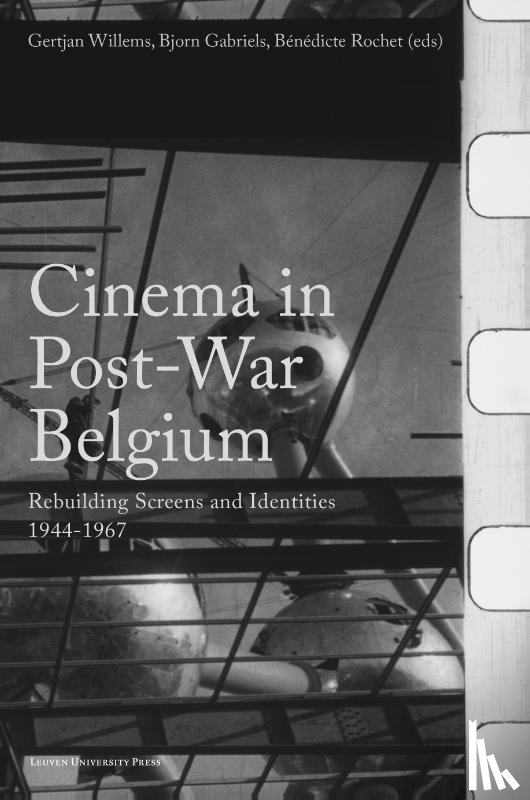
Cinema in Post-War Belgium

Rebuilding Screens and Identities, 1944-1967

Description

First comprehensive history of Belgian cinema in the post-war decades. Between the liberation of 1944 and the mid-1960s, cinema in Belgium was both booming and fragile. Film theatres across the country attracted record audiences and were rebuilt into dazzling spaces, while local film production remained a precarious enterprise. This book brings that paradoxical landscape to life. It explores cinephile culture and institutional developments alongside popular comedies, art documentaries, colonial films, industrial productions and experimental shorts. Sixteen chapters show how cinema related to Belgium’s shifting identities in a period of reconstruction and transition. The book also challenges long-standing notions of a linguistic divide within Belgian cinema, showing that in the decades before regional film policies emerged, filmmakers and audiences largely operated within a shared national film culture. Generously illustrated and grounded in fresh archival research, this is the first comprehensive history of Belgian cinema in the post-war decades. Situating Belgian cinema within wider cultural, political and international contexts, it offers a compelling resource for film historians, cultural scholars, and heritage institutions. Foreword Tomas Leyers Acknowledgements Introduction: Cinema in post-war Belgium Bjorn Gabriels, Gertjan Willems, & Bénédicte Rochet PART I: Setting the Stage: Contextualising Post-War Belgian Cinema Chapter 1. From national to regional film support: Belgian film production policy in the post-war era (1945–1967) Gertjan Willems & Alexander De Man Chapter 2. Concentric spheres of control: On film censorship and discipline during the Belgian Trente Glorieuses Daniel Biltereyst Chapter 3. Reel power: Belgian colonial filmmaking after 1945 Matthew G. Stanard Chapter 4. Mechanics of the industrial image at Sofidoc, the Société du Film Documentaire: Where aesthetic ambitions meet the demands of commissioned films (1947–1960) Bénédicte Rochet Chapter 5. From film club to film archive: The 1947 Brussels 1st Festival Mondial du Film et des Beaux-Arts and the making of the Cinémathèque de Belgique Xavier García Bardón Chapter 6. From cinephilia to cinéma critique: The Haesaerts brothers’ impact on post-war Belgian film culture, non-fiction networks, and art documentaries Joséphine Vandekerckhove PART II: Behind the Camera: Key Figures and Filmmaking Practices Chapter 7. Flemish popular comedies: Edith Kiel, Jan Vanderheyden, and the Antwerp Film Company AFO, 1952–1961 Dirk Van Engeland, Roel Vande Winkel, & Gertjan Willems Chapter 8. Towards the myth of the industrial hero: Charles Dekeukeleire’s theories on fiction films Mathilde Lejeune Chapter 9. Marcel Broodthaers: Documentary filmmaker (1957–1964) Margaux Van Uytvanck & Raf Wollaert Chapter 10. Red searching for form: The early works of Harry Kümel Ernest Mathijs Chapter 11. Tracing the origins of Fugitive Cinema Liesje Baltussen & Gertjan Willems PART III: On Screen: Identities, Politics and Modernism Chapter 12. Ceci est un cinéma d’auteur belge: Belgian auteur cinema inspired by Italian, French, and Belgian modernist cinema Wouter Hessels Chapter 13. Meeting another Waterloo: Edmond Bernhard and the “metaphysical subversion of the tourist film” Bjorn Gabriels Chapter 14. Henri Storck’s The Smugglers’ Banquet (1952): Blurring the borders between commission and reality Christoph Brüll & Jeremy Hamers Chapter 15. Silver screens, gendered lenses: Age and gender in post-war Belgian fiction films Femke De Sutter Chapter 16. A royal zero hour? Belgian King Leopold III and SS officer Ernst Schäfer making Masters of the Congo Jungle (1958) Matthias De Groof, Bjorn Gabriels, & Koen Aerts Contributors Index
€ 43,20
Paperback
 
Free shipping from
€ 19,95 within The Netherlands
Year
2026
Language
English
Pages
384
EAN
9789462705173
Binding format
Paperback

You will always receive the last edition from us!


Categories

Boekstra