Description
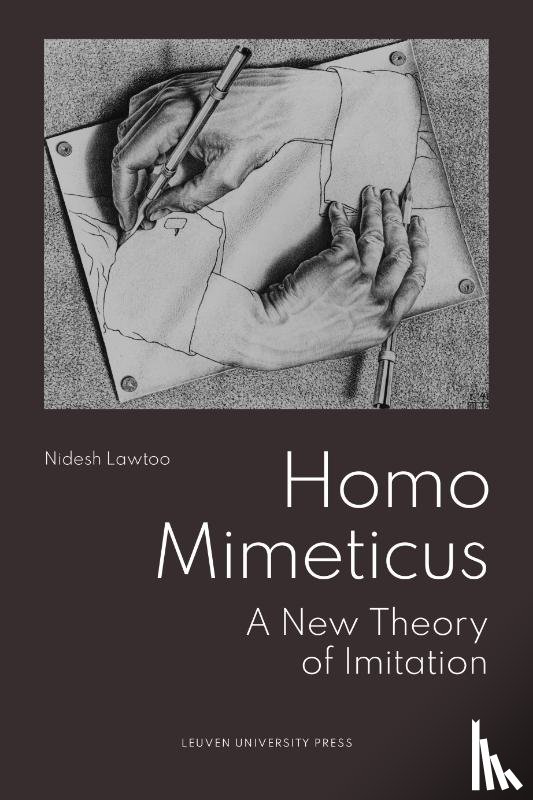
Genealogy of one of the most ancient and influential concepts in western thought: Mimesis Imitation is, perhaps more than ever, constitutive of human originality. Many things have changed since the emergence of an original species called Homo sapiens, but in the digital age humans remain mimetic creatures: from the development of consciousness to education, aesthetics to politics, mirror neurons to brain plasticity, digital simulations to emotional contagion, (new) fascist insurrections to viral contagion, we are unconsciously formed, deformed, and transformed by the all too human tendency to imitate—for both good and ill. Crossing disciplines as diverse as philosophy, aesthetics, and politics, Homo Mimeticus proposes a new theory of one of the most influential concepts in western thought (mimesis) to confront some of the hypermimetic challenges of the present and future.
Written in an accessible yet rigorous style, Homo Mimeticus appeals to both a specialized and general readership. It can be used in courses of modern and contemporary philosophy, aesthetics, political theory, literary criticism/theory, media studies, and new mimetic studies. Imitation is, perhaps more than ever, constitutive of human originality. Many things have changed since the emergence of an original species called Homo sapiens, but in the digital age humans remain mimetic creatures: from the development of consciousness to education, aesthetics to politics, mirror neurons to brain plasticity, digital simulations to emotional contagion, (new) fascist insurrections to viral contagion, we are unconsciously formed, deformed, and transformed by the all too human tendency to imitate—for both good and ill. Crossing disciplines as diverse as philosophy, aesthetics, and politics, Homo Mimeticus proposes a new theory of one of the most influential concepts in western thought (mimesis) to confront some of the hypermimetic challenges of the present and future.
Written in an accessible yet rigorous style, Homo Mimeticus appeals to both a specialized and general readership. It can be used in courses of modern and contemporary philosophy, aesthetics, political theory, literary criticism/theory, media studies, and new mimetic studies. Introduction: Drawing Mimetic Studies
PART 1 — GENEALOGIES: FOUNDATIONS
Chapter 1: Birth of Homo Mimeticus
Chapter 2: Vita Mimetica in the Cave
Chapter 3: Sameness and Difference Replayed
PART 2 — AESTHETICS: CASE STUDIES
Chapter 4: The Plasticity of Mimesis
Chapter 5: On Animal and Human Mimicry
Chapter 6: The Human Chameleon
PART 3 — POLITICS: MIMETIC RE-TURNS
Chapter 7: Banality of Evil/Mimetic Complexity
Chapter 8: Vibrant Mimesis
Chapter 9: The Age of Viral Reproduction
Coda: The Complexity of Mimesis: A Dialogue with Edgar Morin
Notes
Bibliography
Index