Description
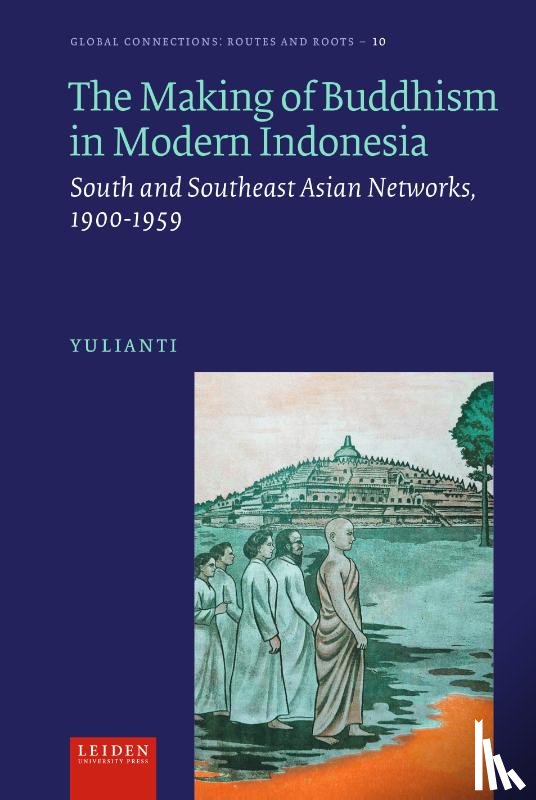
This book focuses on the transnational networks that mediated the (re)introduction of Buddhism that started in late colonial Indonesia and traces them past Independence and into the 1950s. 'The Making of Buddhism in Indonesia' focuses on the transnational networks that mediated the (re)introduction of Buddhism that started in late colonial Indonesia and traces them past Independence and into the 1950s. The book argues that the global rise of Buddhism, particularly in Sri Lanka, Burma, and Singapore, also caused the introduction of Buddhism in colonial Indonesia as well. In this respect, the book looks at the connections that Indonesian Buddhists established with Buddhist networks from abroad during the late colonial period. In addition to influence from the colonial world, the book examines the role of Indonesians of Chinese descent (peranakan) in Batavia. Efforts to revise “Chineseness” under influence of developments in China, also played important role in curating Buddhism in Indonesia. Finally, the book examines inter-Asian Buddhist networks. These networks created long-lasting Dhammic connections that survived the colonial era. In 1950s, inter-Asian Dhammic connections expanded their reach in South and Southeast Asian to Thailand, Vietnam, Cambodia, Burma, as well as India. This was triggered by an increased need among Buddhists in Indonesia to gain international recognition. This was one of the conditions for Buddhism to be officially recognized as a religion, or at least for Buddhism to be practiced in the new Indonesian state. 'The Making of Buddhism in Indonesia' focuses on the transnational networks that mediated the (re)introduction of Buddhism that started in late colonial Indonesia and traces them past Independence and into the 1950s. The book argues that the global rise of Buddhism, particularly in Sri Lanka, Burma, and Singapore, also caused the introduction of Buddhism in colonial Indonesia as well. In this respect, the book looks at the connections that Indonesian Buddhists established with Buddhist networks from abroad during the late colonial period. In addition to influence from the colonial world, the book examines the role of Indonesians of Chinese descent (peranakan) in Batavia. Efforts to revise “Chineseness” under influence of developments in China, also played important role in curating Buddhism in Indonesia. Finally, the book examines inter-Asian Buddhist networks. These networks created long-lasting Dhammic connections that survived the colonial era. In 1950s, inter-Asian Dhammic connections expanded their reach in South and Southeast Asian to Thailand, Vietnam, Cambodia, Burma, as well as India. This was triggered by an increased need among Buddhists in Indonesia to gain international recognition. This was one of the conditions for Buddhism to be officially recognized as a religion, or at least for Buddhism to be practiced in the new Indonesian state. Table of Contents
Introduction
Chapter 1 Rethinking Buddhist Revivalism
Chapter 2 Southern Buddhist Networks
Chapter 3 “Northern Wind” Buddhists
Chapter 4 Reclaiming Religious Sites
Chapter 5 Performing Buddhism
Chapter 6 Inter-Asian Buddhist Connections
Chapter 7 Continuity and Change in 1950S Indonesia
Conclusion