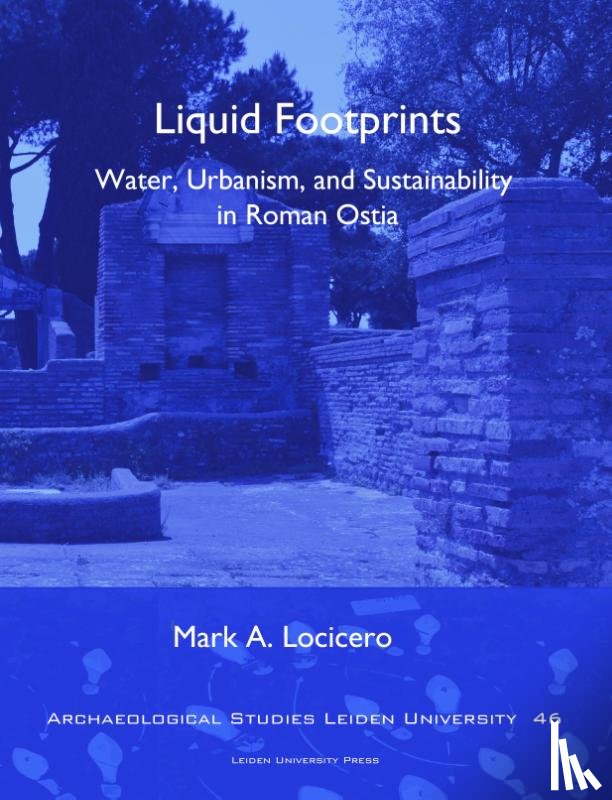
Water, Urbanism, and Sustainability in Roman Ostia
Description
This study opens a dialogue between first and twenty-first century successes and failures in our urban relationship with water. This publication examines the archaeological evidence from three city blocks in Ostia, focusing on elements of the water systems identified by past excavations and within unpublished archival material. Inspired by the diversity of research approaches currently used to assess the sustainability of water in contemporary cities, this study presents the Roman Water Footprint, which diachronically assesses changes to all parts of a hydraulic system (supply, usage, drainage). At the same time, the Roman Water Footprint calculates socio-cultural expressions of water usage, and uses paleo-environmental data to highlight the dynamic natural presence of water.The use of the Roman Water Footprint offers a new look at the wider context of ancient water systems and how they changed over time. This study opens a dialogue between first and twenty-first century successes and failures in our urban relationship with water.Mark Locicero has taken part in several archaeological projects around the Mediterranean. He completed his doctoral studies in 2018 at Leiden University, where he researched the urban history of Ostia and its water system. His current research continues to explore diverse aspects of ancient Mediterranean water systems. This publication examines the archaeological evidence from three city blocks in Ostia, focusing on elements of the water systems identified by past excavations and within unpublished archival material. Inspired by the diversity of research approaches currently used to assess the sustainability of water in contemporary cities, this study presents the Roman Water Footprint, which diachronically assesses changes to all parts of a hydraulic system (supply, usage, drainage). At the same time, the Roman Water Footprint calculates socio-cultural expressions of water usage, and uses paleo-environmental data to highlight the dynamic natural presence of water.
The use of the Roman Water Footprint offers a new look at the wider context of ancient water systems and how they changed over time. This study opens a dialogue between first and twenty-first century successes and failures in our urban relationship with water.