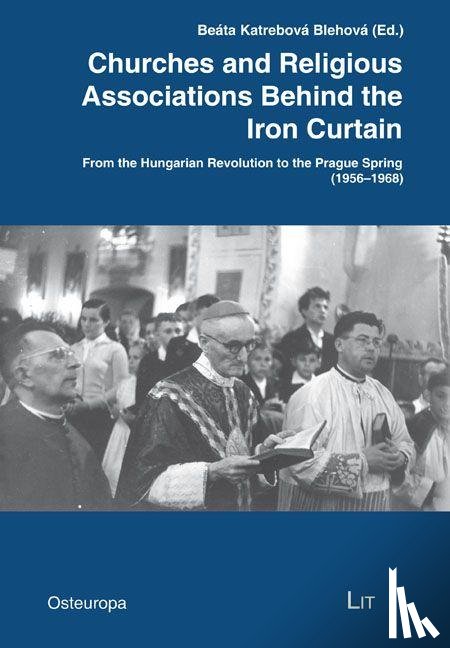
Churches and Religious Associations Behind the Iron Curtain
From the Hungarian Revolution to the Prague Spring (1956-1968)
Description
After 1956 the Communist regimes underwent a partial transformation on religious matters. Following a period of reprisals, the dismantling of ecclesiastical structures and religious communities, and the imposition of an overarching monopoly of power over the churches, a phase of consolidation emerged characterized by constant supervision and control.
Drawing on examples from Poland, Hungary, Slovakia, East Germany, Romania and Yugoslavia, the volume reflects on the complex Church-state relations. It examines the pontificates of Popes Pius XII, John XXIII, and Paul VI in the relation to the communist regimes and explores the canonization of the martyrs of communist tyranny by John Paul II.
Beáta Katrebová Blehová is a research fellow at the Nation's Memory Institute in Bratislava where she focuses on the study of the Slovak exile, anti-communist resistance, and the Czechoslovak State Security during the Cold war.
I have a question about the book:
‘Churches and Religious Associations Behind the Iron Curtain - ’.
Fill in the form below.
We will respond as fast as possible.