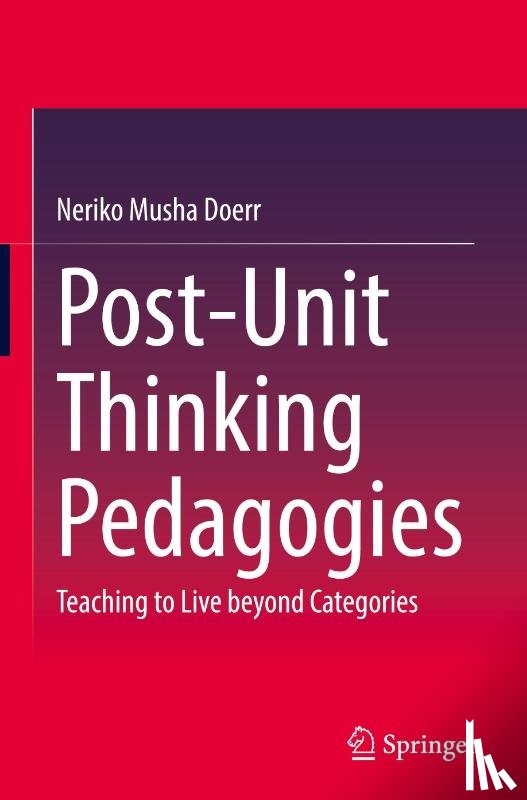
This book offers alternative theoretical approaches and pedagogies that challenge the worldview that divides things/people into bounded categories/units perceived to be internally homogeneous, what it calls “unit thinking” built on the nation-state ideology. Unit thinking is problematic not only because it is inaccurate but also because it encourages an imposition of the “ideal model” (e.g., the standard language) onto people and a hierarchization based on their proximity to the “ideal” (e.g., devalued “dialects”). This book explores an alternative approach—“post-unit thinking”—by drawing on the notions of “fetish” by Slavoj iek and Integrationist Linguistics by Roy Harris and suggests pedagogies in fields that capitalize on “learning from difference.” Theoretically, this discussion of (post) unit thinking is of interest to researchers seeking alternatives to post-structuralist discussions of the politics of difference. This book is also a practical resource for practitioners in study abroad, service learning, and world language education.
I have a question about the book:
'Post-Unit Thinking Pedagogies - Doerr, Neriko Musha'.
Fill in the form below.
We will respond as fast as possible.
We value your privacy
We use cookies to measure traffic, improve Boekstra and let Google tailor ads to your interests. You can keep using the site either way — even if you decline. More info