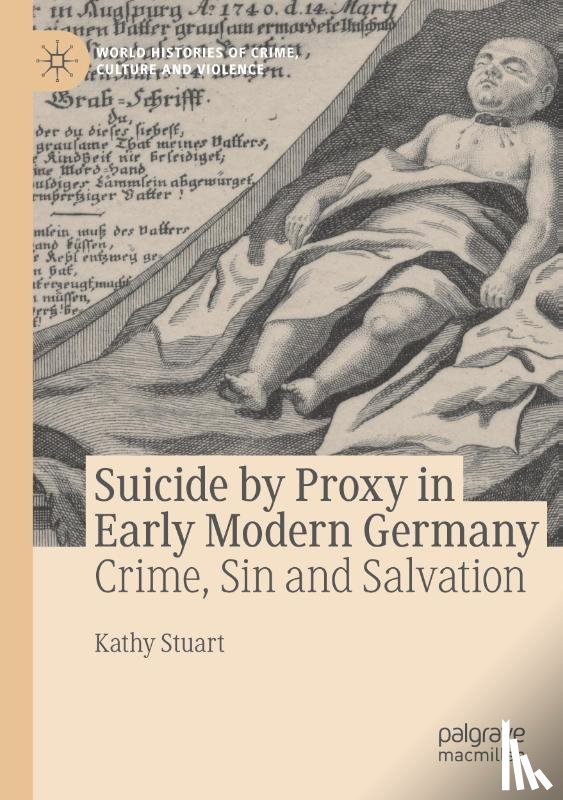
Suicide by Proxy became a major societal problem after 1650. Suicidal people committed capital crimes with the explicit goal of ¿earning¿ their executions, as a short-cut to their salvation. Desiring to die repentantly at the hands of divinely-instituted government, perpetrators hoped to escape eternal damnation that befell direct suicides. Kathy Stuart shows how this crime emerged as an unintended consequence of aggressive social disciplining campaigns by confessional states. Paradoxically, suicide by proxy exposed the limits of early modern state power, as governments struggled unsuccessfully to suppress the tactic. Some perpetrators committed arson or blasphemy, or confessed to long-past crimes, usually infanticide, or bestiality. Most frequently, however, they murdered young children, believing that their innocent victims would also enter paradise. The crime had cross-confessional appeal, as illustrated in case studies of Lutheran Hamburg and Catholic Vienna.
I have a question about the book:
‘Suicide by Proxy in Early Modern Germany - Stuart, Kathy’.
Fill in the form below.
We will respond as fast as possible.