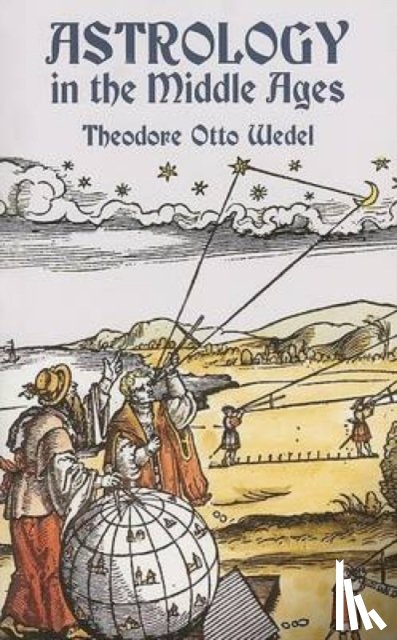
Astrology occupies a prominent place in the history of philosophy and science. Thirteenth-century scholars--even more than the poets and philosophers of ancient Greece and Rome--regarded the rule of the stars over human destiny as an indisputable fact, entering into their every conception of the universe. Theologians credited the stars with a power second only to that of God. Astrology offered a reasoned explanation of an infinite diversity of physical phenomena, and included psychology and ethics within its scope.This volume traces the development of medieval conceptions of astrology from the fifth through fifteenth centuries, highlighted by the twelfth century's sudden revival of Aristotelian and Arabic learning, which heralded the scholastic age. It places particular emphasis on the conflict between ecclesiastical doctrine, inherited from the ancient church, and the growing demands of Arabic science. Enlightening interpretations of astrological references from a fascinating variety of literary sources comprise extracts from medieval romances and the works of Chaucer.Dover (2005) unabridged republication of The Mediaeval Attitude Toward Astrology, Particularly in England, Yale University Press, New Haven, 1920.
I have a question about the book:
'Astrology in the Middle Ages - Theodore Otto Wedel'.
Fill in the form below.
We will respond as fast as possible.
We value your privacy
We use cookies to measure traffic, improve Boekstra and let Google tailor ads to your interests. You can keep using the site either way — even if you decline. More info